
Self-catering • 2026 planning • wheelchair friendly stays
How to Choose a Wheelchair Friendly Self-Catering Holiday Property for 2026
Self-catering holidays give you control over space, routines, and comfort. This guide shows exactly what to look for in a wheelchair friendly property, what to double-check before booking, and how to shortlist options without the usual guesswork.
If you’re planning a 2026 break and you need a wheelchair friendly place to stay, the biggest challenge is rarely the destination. It’s the detail. A property can look perfect online, then fall apart in real life because of a single step, a narrow doorway, a bathroom that is technically “accessible” but unusable, or parking that is far from the entrance.
This article is written for guests who want self-catering accessible holiday accommodation with the kind of practical information that makes booking feel confident, not risky.
Why self-catering is often the best choice
Self-catering is not just about cooking. It’s about independence. It gives you space to move, space to store equipment, and the freedom to manage days in a way that suits your energy levels. It also avoids common hotel issues such as awkward restaurant layouts, inaccessible breakfast areas, or tight corridors that make everyday moments feel like hard work.
For families, self-catering means flexibility with food, naps, routines, and sensory needs. For wheelchair users, it often means choosing a property where the whole layout works together, not just the entrance.
What “wheelchair friendly” should mean in a self-catering property
A wheelchair friendly stay is not a single feature. It’s the combination of access, circulation space, and usability across the whole property. The goal is simple: you should be able to arrive, get inside, move between rooms, use the bathroom, and relax without constant obstacles.
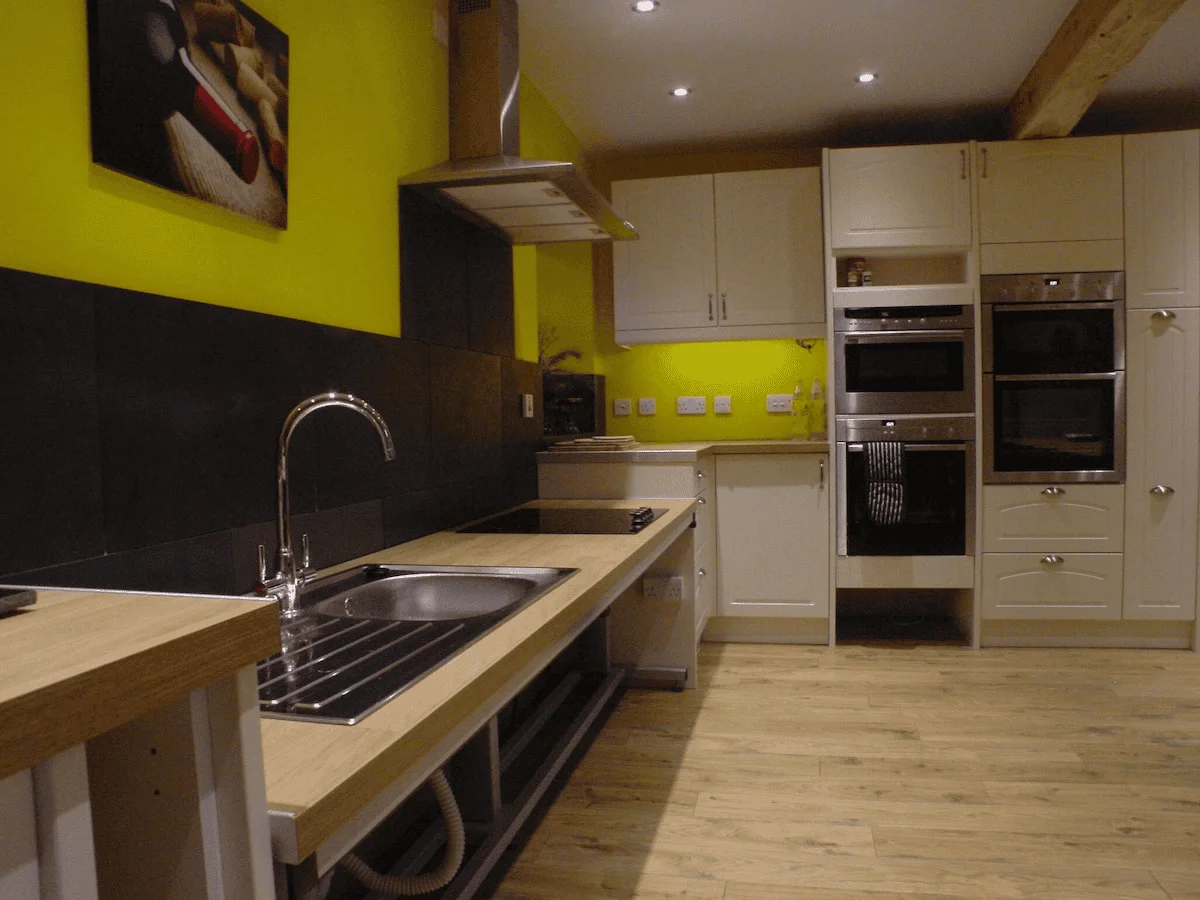
In self-catering properties, the kitchen matters more than people think. You do not need a fully adapted kitchen to enjoy a holiday, but you do need a kitchen you can use safely. Clear floor space, reachable essentials, and an oven and hob you can access without stretching or twisting can make a huge difference.
The five checks that prevent most booking regrets
If you only have time to check a few things, focus on these. They’re the areas that most often cause problems on arrival and the ones that are hardest to “make do” with once you’re there.
- Parking and approach: Is there a suitable space, and can you reach the entrance without steep slopes, or steps.
- The entrance threshold: Many “step-free” properties still have a small lip that stops wheels dead.
- Internal door widths: One narrow doorway can cut off the bathroom or bedroom entirely.
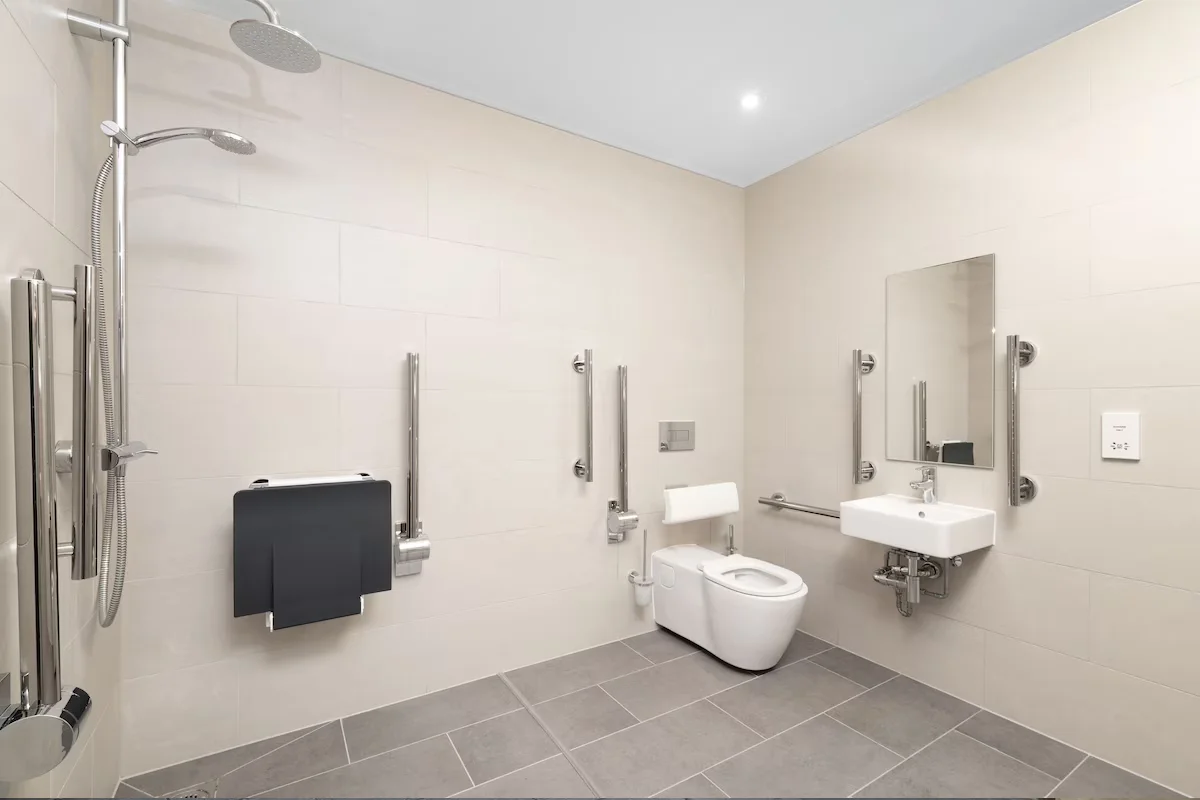
- Bathroom turning space: You need practical room to position a chair, not just a wet room photo.
- Bedroom access: Can you get to the bed from the side you need for transfers, and is there space for equipment.
These checks matter even more for 2026 because the best options get snapped up first. Early planning gives you time to find a place that works properly, not just a place that’s available.
Why planning for 2026 gives you more choice
Genuinely wheelchair friendly self-catering properties are limited in number. The ones that work well for real-life needs often have repeat guests, and they book early. If you’re travelling in school holidays or need very specific features, starting now makes the difference between choosing the right property and settling for a compromise.
How Disability Destinations helps guests shortlist faster
Disability Destinations is built to reduce the time you spend wading through unsuitable listings and chasing basic answers. Instead of starting broad and filtering down, you start with properties aimed at guests looking for wheelchair friendly stays.
The simplest way to use the site for 2026 is to browse a destination you like, apply filters that match your needs, and save a shortlist. Even if you don’t book today, you’ll be in a far stronger position when you’re ready to lock in dates.
Ready to start your 2026 shortlist
Browse wheelchair friendly self-catering holiday properties and narrow down options using filters that reflect real-world needs.
Common questions when booking wheelchair friendly self-catering accommodation
What should I prioritise if I only check one thing?
Prioritise the entrance and bathroom. A single step at the door or a bathroom you can’t manoeuvre in will affect the whole trip, even if the rest looks perfect.
Do I need an adapted kitchen for a self-catering holiday?
Not always. Many guests do well with a standard kitchen as long as there is clear floor space and the most-used items are reachable. The key is safe movement and not having to stretch or twist to use the hob, oven, fridge, or sink.
Why do “wheelchair friendly” listings vary so much?
Because it is often self-described and not consistent. Some listings mean step-free entry only, while others consider door widths, turning space, shower usability, and parking. That’s why detail matters more than labels.
When should I start looking for a 2026 stay?
If you need specific features or you’re travelling in peak dates, start shortlisting now. The most suitable wheelchair friendly self-catering properties often book early.